SFT1 – SYNERGISE System Field Test 1 in Sweden
Bortyka, Sweden
June 2026

SYNERGISE technologies put to the test in realistic disaster response scenarios
The SYNERGISE project has successfully completed its first System Field Test (SFT1), marking an important milestone in the development of its integrated disaster response solution. For the first time, the project’s technologies were brought together and tested as a complete system in large-scale, operational scenarios.
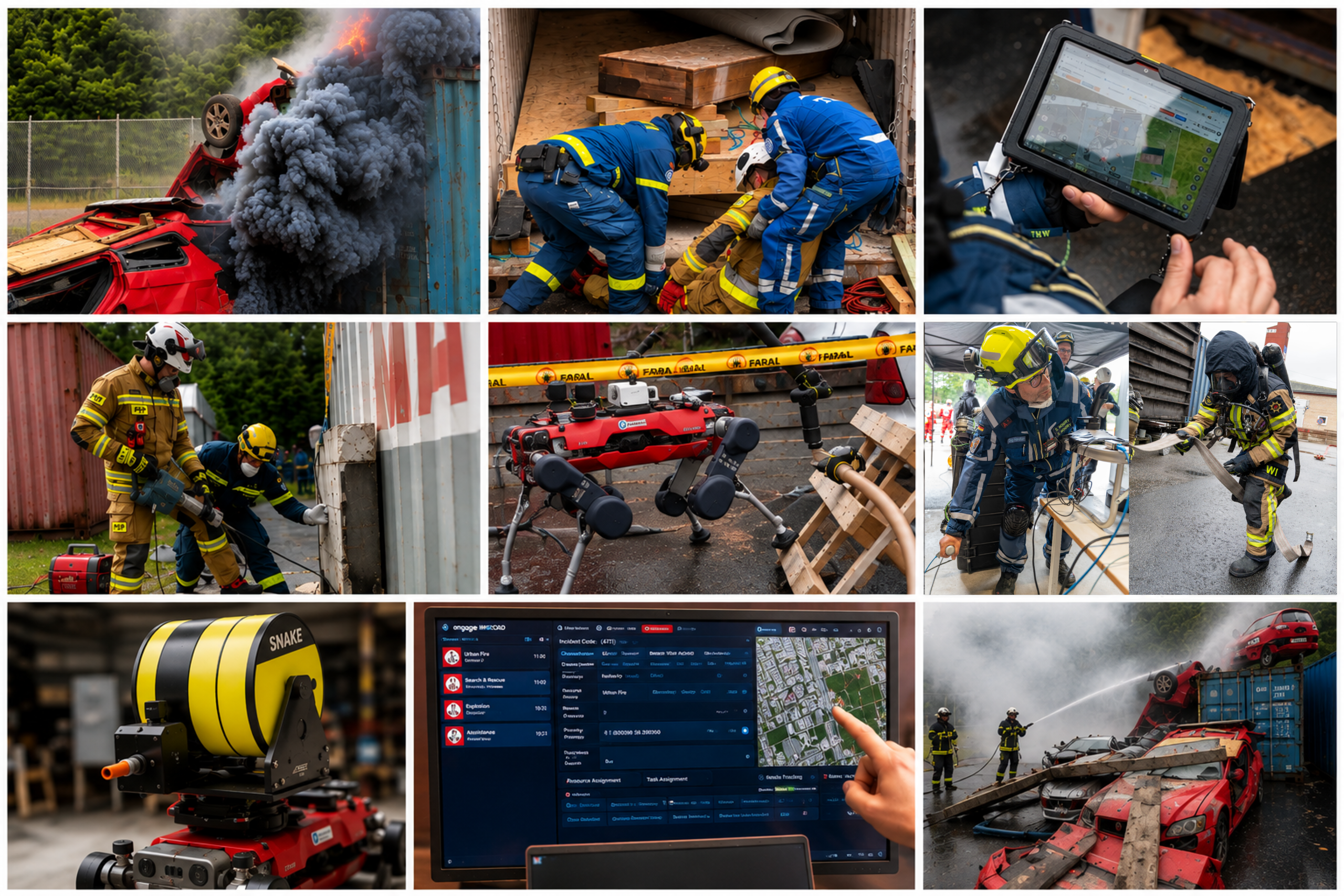
Held from 15 to 17 June in Bortyka, Sweden, SFT1 brought together the the SYNERGISE consortium, including first responders, researchers and technology developers, as well as members of the Advisory Board.
The exercise recreated complex emergency situations requiring close coordination between different response teams and technologies.
Rather than assessing individual components in isolation, SFT1 focused on how the complete SYNERGISE system performs when deployed together under demanding field conditions.
During the exercise, participants demonstrated and evaluated:
- Autonomous ground and aerial robotic platforms supporting search, mapping, reconnaissance, and victim detection.
- Wearable technologies providing real-time information on responder health, safety, and environmental conditions.
- Localisation and tracking technologies enabling accurate positioning of first responders in indoor, underground, and other challenging or GNSS-denied environments.
- Integrated command, control, communication and information management solutions providing first responders and command centres with real-time operational information, enhanced situational awareness, and effective coordination during emergency response operations.
- AI-assisted tools supporting coordination, information processing, and effective human-machine collaboration.
SFT1 represented an important step beyond the previous Component Field Tests. By bringing the individual technologies into a single operational environment, the exercise enabled the consortium to assess interoperability, usability, reliability, and overall system performance.
First responders played a central role throughout the test, using the technologies during the scenarios and providing direct operational feedback. Their experience will help ensure that the SYNERGISE solution is not only technically robust, but also practical, safe, and effective for those who may ultimately use it in real-world emergencies.
Next steps
The findings from SFT1 will now feed directly into the next phase of development. Based on technical results and feedback from participating first responders, the consortium will refine the platform, address identified challenges, and further improve the interaction between its different technologies.
These improvements will prepare SYNERGISE for the second and final System Field Test (SFT2), where the enhanced system will undergo its next major operational validation. The goal remains to provide first responders with technologies that strengthen situational awareness, improve coordination, and support safer and more efficient disaster response.